
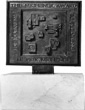
 The Michener Award and the artist who designed it - John Matthews
In 1968, Roland Michener's daughter, Joan was searching for a private studio where she could work on a painting she had been doing of her father - the Governor General. It was to be a surprise Christmas gift for her mother Norah Michener. Joan wanted working space away from the distractions of Rideau Hall to finish her project.
Dr. Robert H. Hubbard, Rideau Hall historian and former chief curator of the National Gallery of Canada in Ottawa, was a close friend of both John Matthews' family and of Roland Michener. He approached John and asked if Miss Michener could borrow his Ottawa studio for a few days. Permission was granted without hesitation. The ties with the Michener family were long standing. John's father, Don Matthews, was friends with both former Prime Minister Lester Pearson and Roland Michener while they served together in Canada's Department of External Affairs. In addition, Pearson had been Don Matthews' history professor at the University of Toronto.
But this was John's first personal contact with the Michener family and it undoubtedly paved the way for his future relationship with the Governor General.
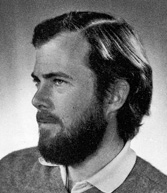
John Matthews was born in Ottawa in 1942. His father, W.D. 'Don' Matthews, was a prominent Ottawa external affairs diplomat who worked under Lester Pearson for several years during the 1940's and 50's. He was also a former Canadian ambassador to a number of countries. Much of young John's early childhood was spent abroad with his family. He lived with his family in Stockholm and Washington. Through his father's association, he was able to meet Lester Pearson on several occasions including one special night when his mother invited Canada's former prime minister home to dinner.
While still in his teens, he enrolled in a summer course at the Banff school of Fine Arts to study painting. In 1962, his growing interest in art took him to the Doon School of Art in Ontario.
The following year he was accepted to the art program at Mount Allison University. Here he was able to rub shoulders with Lawren P. Harris, who was then director of the University's Fine Arts Department, and Alex Colville who had been an instructor at Mount Allison, his alma mater, since 1946. It was Colville who kindled his interest in realism - the true-to-life depiction of nature or contemporary life.
Then it was off to New York and the famed Arts Students League from 1964 to 1966. All of this training provided him with a solid background in painting, anatomy, drawing, print-making, lithography and sculpture. But it was in New York that he finally realized sculpture would be his chosen field.
1969
He travelled extensively throughout Europe, Mexico, and North America where he honed his appreciation and love of the arts.
While still in New York, he wrote to Henry Moore in the hope of working with the famous sculptor at his studio in England. Moore did not require an assistant at the time but later in 1966, when John was again travelling in Europe, he went to visit Moore at his home in England. His timing could not have been better. By this time Moore was looking for an assistant and the young Canadian was hired.
While there was no formal instruction during the year he spent with Moore, it was a marvellous learning experience for the budding artist. Just being surrounded by Moore's sculptures and listening to this quiet unassuming man talk were in themselves inspirational.