
The 2010 Michener Award finalists talk about their award winning stories and the people who helped make them happen - Michener Awards Ceremony, June 14, 2011.
The Vancouver Sun's six-part series Broken Wings examined the inadequate safety standards following a series of fatal float-plane accidents in British Columbia. The stories detailed inexpensive safety improvements that could save lives. Reaction from the federal government was immediate and significant with the introduction of new safety measures including strengthening investigation and enforcement and the formation of a new industry association to address safety and other issues.
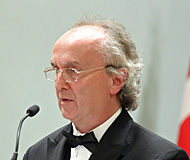
Your Excellencies, distinguished guests, and fellow journalists:
Reporters write a lot of stories during their careers. Do these stories contribute to the public debate? For sure. But do they change society for the better? That's much harder to discern.
Yet one of the reasons we become journalists is to make a positive difference. And that's why the series, Broken Wings, has been so rewarding for me personally.
The series tracked Transport Canada's refusal since 1994 to adopt a transportation safety board recommendation for mandatory wearing of life vests on commercial float planes and other safety initiatives.
The series began with the crash of a commercial deHavilland Beaver aircraft in BC's Gulf Islands that killed six passengers. Then, on the same day the Broken Wings series began, yet another float plane crash, this time killing four near Tofino.
Transport Canada took action, creating a website on float plane safety, distributing safety brochures at float plane check-in counters, conducting special on-site inspections of float plane operators, and continuing to have high-level discussions with industry and stakeholders on new regulations.
Remarkably, the biggest changes have come voluntarily from industry.
The production of emergency pop-out windows and improved door handles to help passengers escape from a crash in water. And the distribution of special life vests to passengers in flight, a trend started by smaller operators and now accepted by the larger Floatplane Operators Association created in the wake of the Gulf Islands tragedy.
Finally - just yesterday - the director general of civil aviation for Transport Canada told me in his office in Ottawa that he expected the federal government to mandate wearing of life jackets in the near future - one of the final and most important pieces in this puzzle falling into place.
All developments spurred on by The Vancouver Sun's persistent and continuing coverage of this issue.
I want to thank deputy managing editor Harold Munro, who supported me from the beginning, editor-in-chief, Patricia Graham, who allowed me the time and space to make this series happen.
I also want to thank the transportation safety board, which remains one of the last places in the federal government where a reporter can - most of the time - still call up a senior civil servant to speak unencumbered by a media relations team.
And, finally, a thank-you to the family members of those who died needlessly in float plane crashes, who spoke with me in difficult emotional circumstances because they realized the human story was critical to the series' success.
It is a great honour to be here tonight, and to share this moment with Your Excellencies and so many outstanding journalists.
Thank you, and good luck to you all.
Larry Pynn
Michener Awards Ceremony
June 14, 2011.