
by Deborah Wood
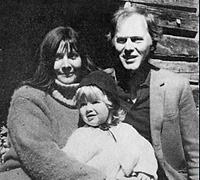
John Matthews is a sculptor whose individual style does not fit into an easy definition. He does penetrate the heart of sculptural emotion and escapes the tyranny of worldly appearances. John conveys the spirit of his subject matter rather than natural realistic shapes. He simplifies form almost beyond recognition to convey concentrated emotion, enhancing the aesthetic effects through creative use of his materials. Many of his abstract sculptures are reminiscent of organic and inorganic shapes.
John Matthews' style springs from the intellectual and cultural ethos of the radical abstract and surrealistic movements of the 20th century modernists. His interlocking and interrelating, multi-piece works of art indicate Matthews is a progeny of Brancusi and Henry Moore in that he also is in a vanguard of experiment. Yet in a world where everything is disposable, and aligned towards exhibitions and events rather than permanent objects, a world of junk and scrap assemblages with overtones of sheet metal and plastic; Matthews is traditional in truth to his material, bronze.
Many modern sculptors are hostile to the notion of permanence. John Matthews combines traditional materials with abstract contemporary expression. Bronze casting is one of the oldest and most widespread techniques in sculpture but it has always been conceived of as a method of giving permanence to objects, and as an exploration of sensuous surface qualities. It is not likely a bronze sculpture would be melted down for weaponry in times of war, says John. The desire for permanency is probably why I choose to reside in a one-hundred and fifty year old stone house in the country.
Much of today's linear sculpture evokes anger and hostility from the public as the motive is rarely to express beauty. John Matthews is propelled by intuitive, creative powers in search of beauty and harmony. He seeks the eternal as well as affirmation of his deepest instincts of life against a frustration that comes from the inhuman forces of our civilization. Some of his varied works of art are lyrical and whimsical. He does not restrict his sculpting to single static forms. The artist relates and combines together open forms of varied sizes, sections and directions that mesh into one organic whole. John Matthews enjoys creating multi-part sculptures that work together but reflect lovely subtle tensions that have an edge or that disturb awareness in the viewer. Baudelaire, in reference to correspondences, noted, There are real but irrational associations between disparate objects. To a poet these correspondences may be colour, sound, spelling, rhythm, but to a sculptor it is always shape.
John Matthews gives definition to feeling and form to perception when he reanimates matter. Inspiration for his subject matter germinates from random accidental relationships of wax pieces discarded into a pile on the studio work table as he carves wax maquette prototypes of his final bronze castings. Other starting points evolve from walks on the beach by his summer cottage on Georgian Bay. Matthews pays great attention to the treasury of natural shapes such as rocks, shells and bones and notes changes wrought by the vital forces of the wind and sea. Some of his sculptures, such as Skiathos, are developed from impressions of rock formations, found objects and caves along the shorelines of Greece. A snowman, melting in the warm sun, was transformed into an abstract. John Matthews also sketches images that flow from his subconscious.

John Matthews' seven foot sculpture entitled, Phoenix, is of monumental weight and mass. It reflects an animated presence of abstract purity, grace and dignity in defiance of death. The phoenix, symbol of immortality, echoes the existential feeling of our times through the embodiment in bronze of a mythical form from an ancient realm. The Phoenix emerges from its bronze repose seemingly undergoing a metamorphosis in the solemn stillness and solitude of John's personally landscaped gardens. A metaphor from the artist's subconscious, it represents the transitory nature of existence. He transforms this theme into an abstract of beauty and serenity; enfolding birth, hope and change.
There is a deep sense of the numinous - of the mana of animistic "center" vitality. A numen is an indwelling force, divinity or spirit that animates or guides. It evokes awe, reverence and mystery. John Matthews' sculptures have romantic overtones, the alogical playing with associations. He transforms his psychic experience of the magical elements in nature into forms which function as solid metaphors. They are icons of the artist's sense of numinosity, objectified into unique symbols.
One of his more recent works of art entitled, Tango, reveals a significant change in expression. This sculpture is not organic in form but hard edged and angular with a more severe mood. He is driven in search of an equilibrium of his inner feelings and responsibilities.
When not sculpting, John Matthews finds practical outlets for his creative energies in hobbies such as architectural and interior design, landscaping and gardening. He is still dealing with space and how to divide it. In the future he aspires to study marble carving in Italy. Future projects include sculpting monumental pieces of art for outdoor environmental purposes.
1961 - Attended Banff School of Fine Arts
1962 - Attended Doon School of Art, Ontario
1963 - 64. Attended Mount Allison University, New Brunswick
1964 - 66. Studied at Art Students' League, New York
1966 - 67. Assistant to Henry Moore, Much Hadham, England
John Matthews has been commissioned by His Excellency Roland Michener to create the Michener Award for Journalism; commissioned by Dr. R.H. Hubbard, chief curator of the National Gallery of Canada, to make a ceremonial mace for the Royal Society of Canada; commissioned by Her Excellency Mme. Jules Léger, to make a medal awarded annually by Heritage Canada and commissioned by Governor General Schreyer to design an award for the Association of Consulting Engineers of Canada.
He has won the Heritage Canada regional award for restoration of a stone building in Perth, Ontario. John Matthews is also skilled at realistic representation and was commissioned to make a bust of Robert Borden for the Rideau Club of Ottawa. He has exhibited in many galleries and art shows in Lanark, Ottawa, Toronto, Montreal, Vancouver. Presently he is working on a privately commissioned sculpture. His works of art can be seen at:
Dominion Gallery, Montreal.
Robertson Gallery, Ottawa.
The Artist's Studio, RR #3, Perth, Ontario.